
Block Puzzle Games
There is a published proof that you must eventually lose. It is not you.
48 games · hand-picked, then filled from the catalogue
Here is a fact that ought to be more comforting than it is: it has been proved that you have to lose.







How this list is put together
In 1997 Heidi Burgiel published a short paper with the excellent title How to Lose at Tetris. The argument is simple enough to follow without any mathematics. Take an S piece and a Z piece and alternate them. Whatever you do with each one, that pair leaves a hole you cannot fill later. Repeat the alternation long enough and the board fills up regardless of how well you play — there is no arrangement, no strategy, no skill level that survives it.
A random piece generator will eventually produce that run. So every game of the falling kind ends, and it ends because the game is built to end, not because you got tired.
And you cannot play it perfectly either
The second result is younger and even less forgiving.
In 2002, Erik Demaine, Susan Hohenberger and David Liben-Nowell proved that deciding the optimal play in Tetris is NP-complete — the same class of problem as scheduling and routing, the ones we do not know how to solve efficiently. They went further and showed it is hard even to approximate well.
Which means the gap between your play and perfect play is not a training gap. Nobody has perfect play, including the computer. The genre is one of the few where the ceiling is provably out of reach for everybody, and that is a decent part of why it has survived forty years.
Two genres, one shelf
They look alike and they are not alike, and choosing wrong is the commonest way to have a bad ten minutes here.
The falling kind. A piece descends, the clock speeds up, you stack until you make a mistake. The skill is pattern recognition running against a timer, and it wants real keys — rotate, soft drop, hard drop, hold. It punishes hesitation and rewards muscle memory.
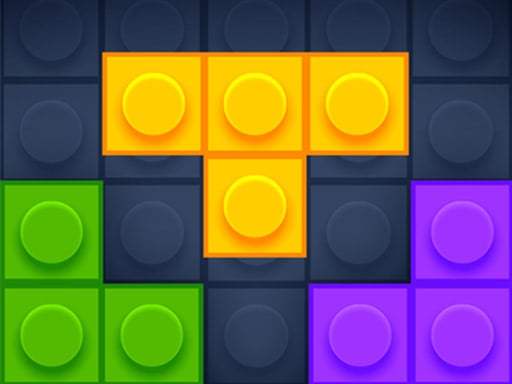
The placement kind — 1010, Block Blast and their cousins. Three shapes wait beside a grid, nothing moves, and there is no clock whatsoever. You lose when none of the three fits. The skill is entirely different: you are not trying to keep the most empty space, you are trying to keep the most useful shapes of empty space. A board with a clean 3×3 square open and no straight line of five is in far more trouble than one with less room but better variety. That single realisation is worth about twenty thousand points to most players.
Choosing in ten seconds
On a phone, take a placement game. Dragging a shape onto a grid is what fingers are good at, and there is no timer to be beaten by an unresponsive tap.
On a desktop with a keyboard, take a falling game — that is the version the genre was designed for and it still feels best there.
If you want to be calm, placement. If you want to be wired, falling. They genuinely do different things to your afternoon.
The four at the top
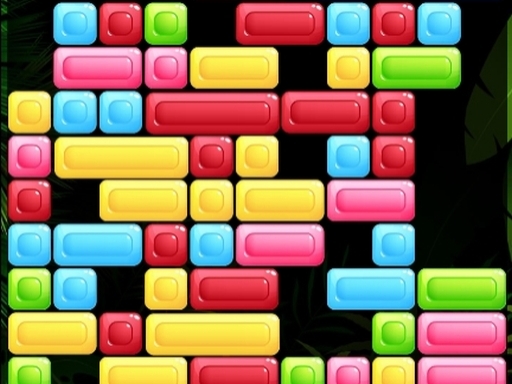
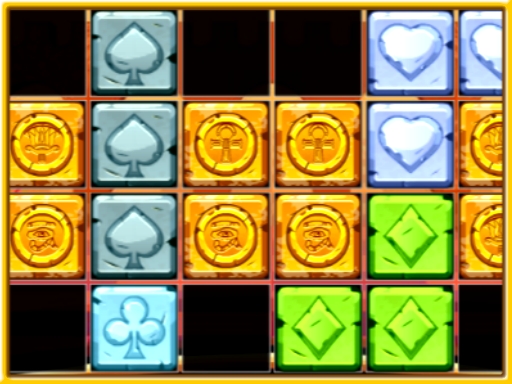
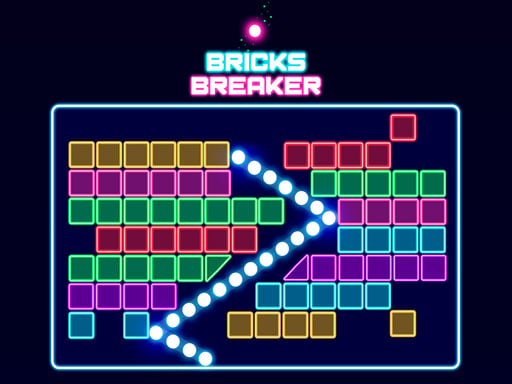
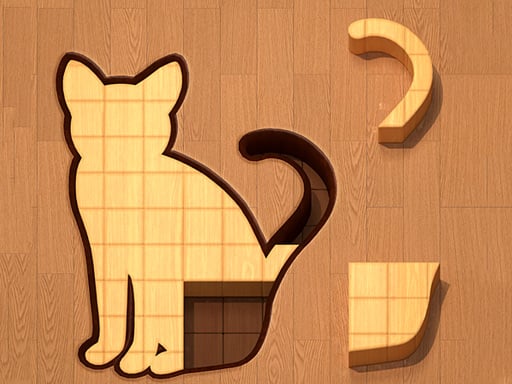
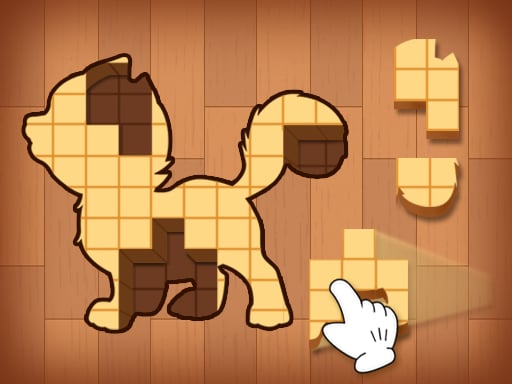
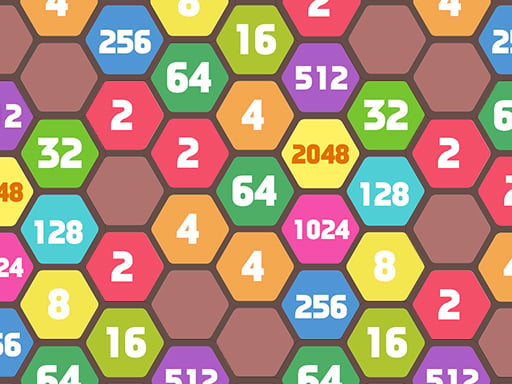
A straightforward falling stacker that works on mobile, a ten-by-ten placement grid, a variant where the blocks behave like sand and pour into the gaps — which breaks the usual geometry in a way that is worth seeing — and a clears-based block game of the kind that has taken over app stores. Behind them the block and stacking tags, forty-eight deep.
Questions people ask
Is it true you always lose eventually?
For the falling kind, yes, and it is proved. In 1997 Heidi Burgiel published a short paper showing that a long enough alternating run of S and Z pieces forces the board to fill no matter how well you play — no strategy survives it. Since a random piece generator will eventually produce that run, every game ends. You are not getting worse; the game is designed to win.
Why can I never play it perfectly?
Because playing it optimally is a genuinely hard computational problem, not a matter of practice. A 2002 paper by Demaine, Hohenberger and Liben-Nowell proved that deciding the best play in Tetris is NP-complete, and hard even to approximate. Nobody has a good algorithm for it either.
What is the difference between these and 1010 or Block Blast?
Nothing falls. You are given a few shapes and an empty grid and you place them wherever you like, with no clock at all. It is a packing problem rather than a reflex test, and the losing move is almost always keeping the wrong shape of empty space rather than too little of it.
Do they work on a phone?
The placement games do, beautifully — you drag a shape onto a grid, which is exactly what a finger is for. The falling games are harder, because fast rotation and hard drop want keys. We mark which is which.