












How this list is put together
Space is black. A starfield is a few hundred white dots on nothing, and it compresses to almost nothing. A racing game has to carry a city: roadside textures, buildings, crowds, a skybox, tarmac. A space shooter carries a ship, some enemies, an explosion and the void, and the void is free. That is why this genre survived every era of slow connections — it was the one that still worked on them — and it is why these pages open before you have finished reading this sentence.
What is actually on this page
Four kinds of game, and it is worth knowing which you are clicking.
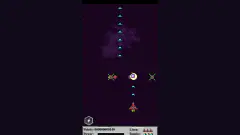
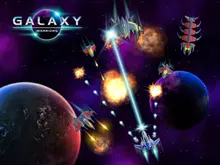
Scrolling shooters, where you hold a lane and the screen brings the work to you. This is the oldest idea in the medium and it is the best represented here, because it is also the cheapest to build well.
Gravity games: landers, orbit puzzles, slingshots around a planet. These are the ones that reward patience rather than reflexes, and the ones most likely to teach you something by accident — after ten minutes of a lander you have a working intuition for what a retro-burn does.
Dodgers, where the asteroid field is the whole game and your only verb is move.
And a few colony and traffic games, where space is the setting rather than the mechanic.
The ships do not turn like that, and it does not matter
Almost every game on this page treats space like an ocean: you point the nose, you accelerate, and if you stop pressing the button you slow down. Actual spacecraft do not do this. With nothing to push against, a ship keeps whatever velocity it already had until something changes it, which is why the handful of games here that model real momentum feel so strange — you turn to face the asteroid and keep drifting sideways into it.
Both designs are deliberate. The arcade version is a fighter plane with stars painted behind it, and it is the right choice for a game you play for ninety seconds. The realistic version is a puzzle about planning ahead. If a space game ever felt slippery and wrong to you, that is the difference, and now you know which one you prefer before you click.
Play them on the school laptop
Weight is the point here. Our page for schools publishes what the games in this catalogue actually weigh, because a classroom of thirty opening different games at the same time is a real number on a real connection. Space is where the light games are: no download, no plugin, no install, and a third less to carry than the average page on this site.
If you want the rest of the lightweight end of the catalogue rather than just the stars, the games that run on a school Chromebook are picked on exactly that measurement.