
Geometry Dash Games
You are not reacting to the spikes. At that speed nobody can. You are remembering them.
42 games · hand-picked, then filled from the catalogue
There is one fact that explains this entire genre, and almost nobody says it out loud: you cannot react fast enough, and the game knows.








How this list is put together
A healthy adult takes roughly two-tenths of a second to turn something they see into a finger that has moved. At the speed these levels scroll, an obstacle is frequently on screen for less than that. So the honest description of what you are doing is not dodging. You are replaying a sequence you have already learnt, and the first thirty deaths are how you learn it.
Once that clicks, the frustration changes shape. Dying at the same spike for the twentieth time is not failure — it is the mechanism. The genre is a memorisation game wearing a reflex game's clothes.
The music is not a soundtrack
It is the instrument you actually play with.
In a properly built level the obstacles are placed on the beat, which means the track is telling you when to press before your eyes get there. Ears are ahead of eyes here — rhythm is predictive, sight is reactive — and that is the whole reason the good levels feel fair at speeds that should be impossible.
It also gives you a one-minute test for any clone. Turn the sound on and play a stretch. If the jumps land with the beat, someone built the level to the music and you are in good hands. If the music is just playing in the background while triangles go past, the level was drawn and the song was added afterwards, and it will feel arbitrary no matter how much you practise. That single check separates the genre's good browser entries from most of the rest.
One button, several vehicles
The other thing worth knowing before you start, because it catches everyone.
The cube jumps: tap once, one jump, gravity does the rest. Then the level hands you a ship, and the same button now means thrust upward continuously while held — hold and you rise, release and you fall. Then a wave, where the button flips you between two fixed diagonals and there is no neutral at all.
Same button, three completely different physical models, switched mid-level without warning. The jump from cube to ship kills more first-time players than any spike does, and it is not a difficulty spike, it is a language change.
What is here
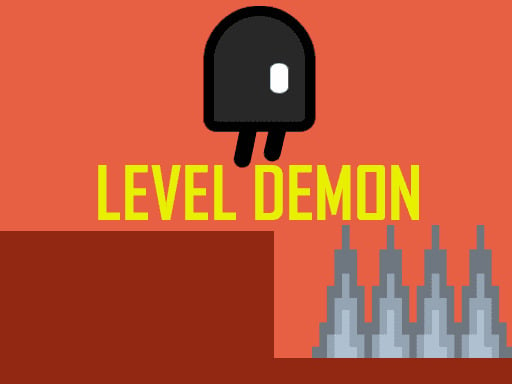
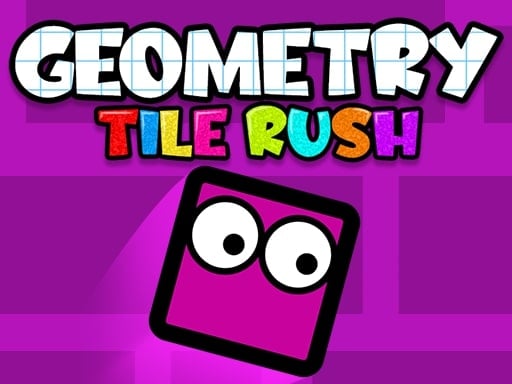
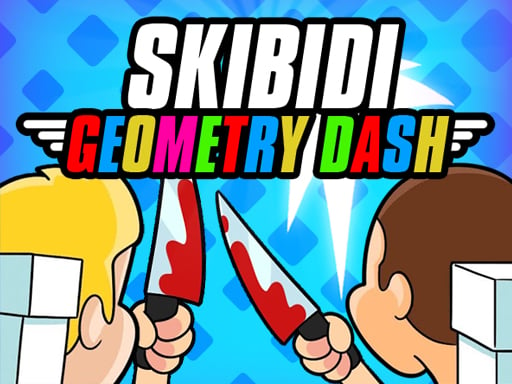
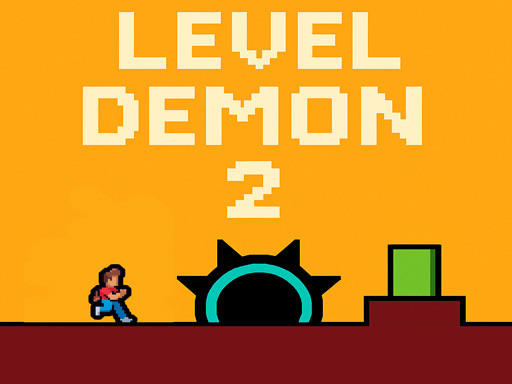
Forty-two games sit under the geometry and rhythm tags in this catalogue. Four are picked out at the top: a straightforward cube runner, a harder one built around memorisation, a wave-mode trial, and a football-flavoured take that is stranger than it sounds.
The real Geometry Dash is not among them and never will be — it is a paid game by RobTop Games with its own editor and its own community. What is here is the genre that grew up around it, free, and running in a tab.
Questions people ask
Why do I die at the same spike every time?
Because you are trying to react, and at that scroll speed reaction is not available. A visual stimulus takes a healthy adult somewhere around a fifth of a second to turn into a finger movement, and the obstacle is often on screen for less than that. The genre knows this. It is built to be memorised, not read, and dying at the same spike twenty times is the intended way to learn it.
Should I play with the music on?
Yes, and it is not decoration. In a well-built level the jumps land on the beat, so the track is a metronome telling you when to press. Players who mute it and rely on their eyes get worse, not better. If a clone's music is not synced to the level, that is the clearest sign it is a bad clone.
Is this the real Geometry Dash?
No. Geometry Dash is a paid game by RobTop Games with a level editor and a community that has built millions of levels. What the browser has is the genre — one button, spikes, a beat — made by other people. Some are careful about the rhythm and some just put triangles on the floor.
Do they work on a phone?
Several do, and we mark which. It is one button, so touch is a perfectly good input — the tap is the same as the click. What suffers on a small screen is seeing far enough ahead, which matters more here than in almost any other genre.