










How this list is put together
Jigsaw puzzles began as a geography lesson
Around 1760 a London mapmaker and engraver, John Spilsbury, glued a map onto wood and cut it along the borders, so children could learn the countries by putting them back. The saw that gave the toy its name came in 1855, and the words "jigsaw puzzle" only appear in 1906. By 1933, in the middle of the Depression, factories were turning out ten million puzzles a week, and people rented them for five cents a night.
The appeal has not changed. There is no wrong move: each piece fits one place, so the only question is how fast you find it. That is why a jigsaw calms people down rather than winding them up.
What the online ones have in common
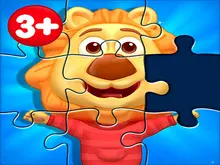
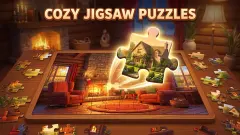
Nearly one in four of the jigsaws in our catalogue are three templates with different photos. You can hear it as soon as you play them: the same sounds, the same pieces snapping the same way. And in none of them can you turn a piece. Every piece arrives the right way up. Online jigsaws like these are cool jigsaw puzzles for a tired evening, easier than cardboard, where half the work is rotation.
The number of pieces is the setting that matters, and many offer an easy, medium and hard mode. Start with the edges: they are the only pieces with a straight side. And nearly all of them write to your browser's storage, so a picture left half done can wait for you, on that device only.
Sliding puzzles: half of all shuffles have no answer
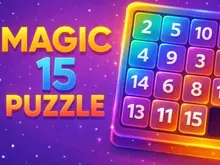
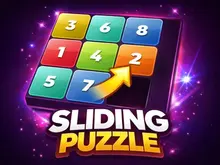
The 15 puzzle, fifteen numbered tiles in a four by four frame, was invented by Noyes Chapman, a postmaster in New York State, who was showing it to friends by 1874. In 1880 it became a craze. The famous puzzle writer Sam Loyd later claimed it as his own, which was false, and offered $1,000 to anyone who could swap the 14 and the 15. Nobody could: in 1879 two mathematicians, Johnson and Story, had already proved that half of all starting positions cannot be solved.
That is useful to know. A good sliding game shuffles by making real moves, so it can always be undone. If you are stuck on the last two tiles after an hour, the board may be the problem, not you.
Jigsaw puzzles for seniors: what the research says
Most pages promise that jigsaws protect your memory. The best study we found is more careful. In 2018 researchers tested 100 healthy adults aged 50 and over: people good at jigsaws were also good at a whole range of visual and spatial skills. But when some of them puzzled every day for 30 days, they got better at puzzles and not at the rest. A lifetime of puzzling may help; a month does not show it. Play them because they are pleasant, which is reason enough.
If you like pictures without pieces, Pixel Art - Color by Numbers fills 104 of them square by square. For grids with rules, try sudoku and logic games, block puzzle games, mahjong games or memory games.