
Memory Games
You can hold about four things at once, not seven. The number everybody quotes was revised down decades ago.
36 games · hand-picked, then filled from the catalogue
Italiano ›Français ›Português ›Español ›
Everybody quotes the wrong number.















How this list is put together
«The magic number seven, plus or minus two» comes from a 1956 paper by George Miller, and it is one of the most cited findings in psychology — and one of the most misremembered. Miller was describing the span of immediate recall for items you are allowed to rehearse. When later researchers blocked the rehearsal, the number fell to about four. Nelson Cowan's 2001 review is the standard reference for that figure, and four chunks is now the working answer for how much can be genuinely held at once.
Which reframes the entire genre. A twelve-pair grid is not measuring whether you are sharp. It is three times past the limit on purpose, and the game is about what you do at the edge of it, not about having a good memory.
The technique that actually works
Two things, and neither is trying harder.
Turn cards in a fixed order. Left to right, row by row, every time. It sounds like it would waste moves and it does at first. What it buys is that you are no longer storing a scatter of coordinates — you are storing a position in a sequence, which is the kind of thing memory is good at. Random clicking makes every card a separate fact to file.
Name what you see, silently. A card you called «the red bike» outlasts a card you only looked at, by a wide margin. Putting a word on an image gives it a second route back — one visual, one verbal — and either one can find it. It is the single cheapest improvement available to anybody playing these.
Two different games under one tag
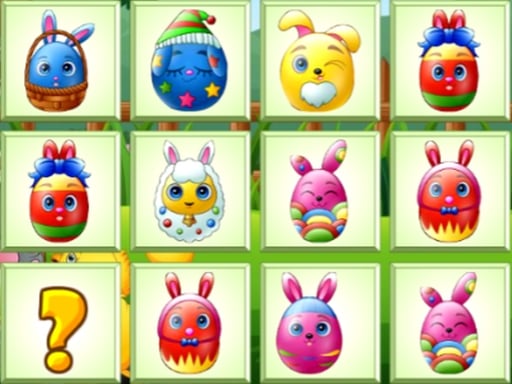
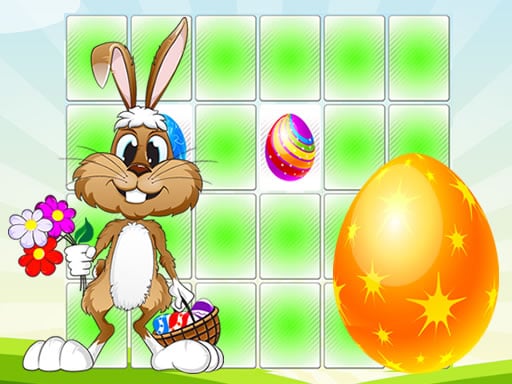
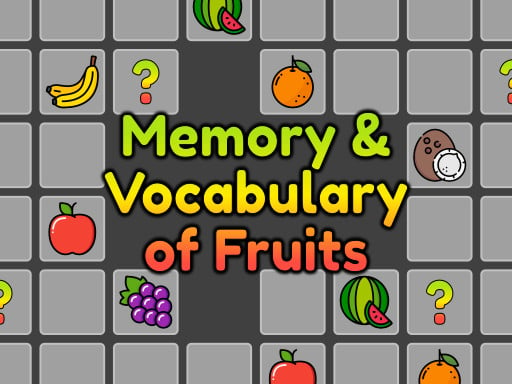
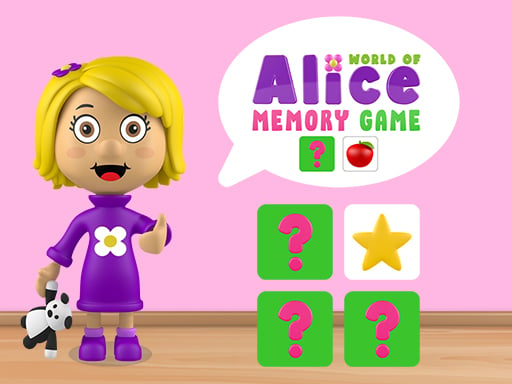
Matching pairs is the classic: a grid face down, two turns per go, and the board shrinks as you clear it. The difficulty curve is built into the shrinking, which is why the last four cards are always easy and the middle is always hard.
Sequence repeating — the Simon pattern — is a different exercise entirely. Nothing is hidden; you are asked to hold an order and give it back, which is working memory in its purest form and the reason those games get impossible so suddenly. There is no partial credit in a sequence.
Both are on this page. If you want the calm one, take a grid. If you want the one that ends abruptly, take a sequence.
What is here
Five hundred and four games in this catalogue carry the memory or matching tags, and the honest note is that the second word does a lot of work: plenty of them are match-three games, which are a puzzle about geometry and not about remembering anything at all. The grid below leans on the memory tag for that reason.
Questions people ask
Why can I never remember more than a few cards?
Because that is roughly the limit, and it is lower than the number people quote. The famous «seven plus or minus two» from 1956 was about how many items could be repeated back, and later work — Nelson Cowan's review in 2001 is the usual reference — puts the real capacity of working memory closer to four chunks when rehearsal is blocked. A grid with twelve pairs is not testing whether you are clever; it is past the limit by design.
Is there a technique?
Yes, and it is not concentrating harder. Turn cards in a fixed order — left to right, row by row — so that what you are storing is a position in a sequence rather than a scatter of coordinates. And name what you see, silently: a card you called «the red bike» survives far longer than a card you only looked at.
Are these good for children?
Among the best on the site, and for a reason that has nothing to do with brain training: a matching grid has no reading, no timer in most versions, and no way to lose. A four-year-old and an adult can play the same board and the four-year-old often wins.
Do they work on a phone?
Most do, and we mark which. Tapping a card is exactly what a finger is for. What breaks on a small screen is a six-by-six grid, where the cards end up too small to tell apart.