

About Wood Block Journey
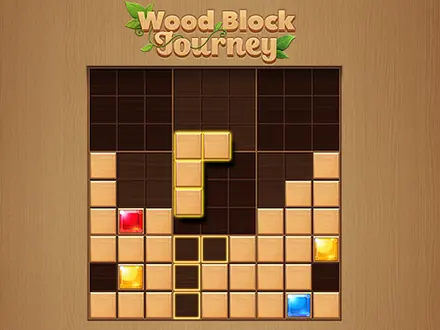
Wood Block Journey hands you a 9x9 grid, three wooden shapes at a time, and no way to turn any of them. The thing that makes it different is drawn faintly on the board and easy to miss: the grid is split into nine 3x3 boxes, the way a sudoku is, and a box clears on its own the moment you fill it.
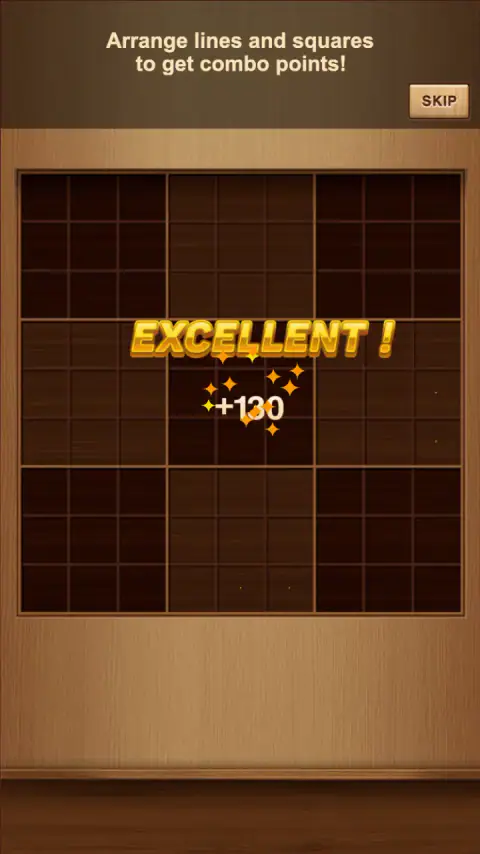
That third way to score changes where you want to put things. A row is nine squares strung across the whole width of the board, and nothing you are ever dealt is nine squares long. A box is nine squares sitting together, and two 2x2 pieces plus a single square finish one. So the corner of the board, usually the place where a run goes to die, becomes somewhere you aim at. Our best move in the tutorial put one four-square piece where a row, a column and a box all finished at once, and the whole board went blank.
It is made by SUN.STUDIO, the studio named in the listing's own publisher field and credited on the game's other listings. This has been available since March 2022 and is a converted Facebook Instant Games release: the page still starts Facebook's Instant Games SDK before it loads the game itself. We played it, finished the first four levels of Journey, and took the endless mode to 528 before it shut on us.
What the game will never give you
The bag holds 51 distinct shapes: one single square, four of two, eight of three, twenty-two of four and sixteen of five. Not all of them ever reach your tray.
Two never turn up at all, however long your run lasts. One is the full 3x3 slab, nine squares in one lump, which would fill an entire box by itself. The other is the five-square diagonal, a staircase that only ever turns up in hand-written Journey levels.
At the other end, the rarest things you can actually be dealt are the plus, the T, the U and the two big crosses. The plus piece in particular is the one that ends runs: five squares in a shape with no flat side.
The 3x3 box is the sudoku part, and it is younger than you think
Sudoku feels ancient and is not. Latin squares, grids where every symbol appears once per row and column, go back to Euler in the eighteenth century. What makes a sudoku a sudoku is the extra constraint on top: the nine 3x3 boxes. That version was almost certainly designed by Howard Garns, a retired architect from Connersville, Indiana, and published by Dell Magazines in 1979 under the name Number Place. Garns died in 1989 without seeing what happened next.
What happened next was Japan. The publisher Nikoli picked the puzzle up in 1984 and its president, Maki Kaji, gave it the short name everyone now uses. It stayed a Japanese speciality for twenty years, until Wayne Gould, a retired New Zealand judge with a program that generated grids, talked The Times of London into printing one. The first ran on 12 November 2004, and within months the puzzle was in newspapers everywhere.
This game borrows the box and nothing else: no numbers, nothing to deduce. But the box is the part that turned a Latin square into a puzzle, and here it is the part that makes nine squares huddled in a corner worth exactly as much as nine strung across the board.
Journey: 100 levels, and 75 of them are the same for everyone
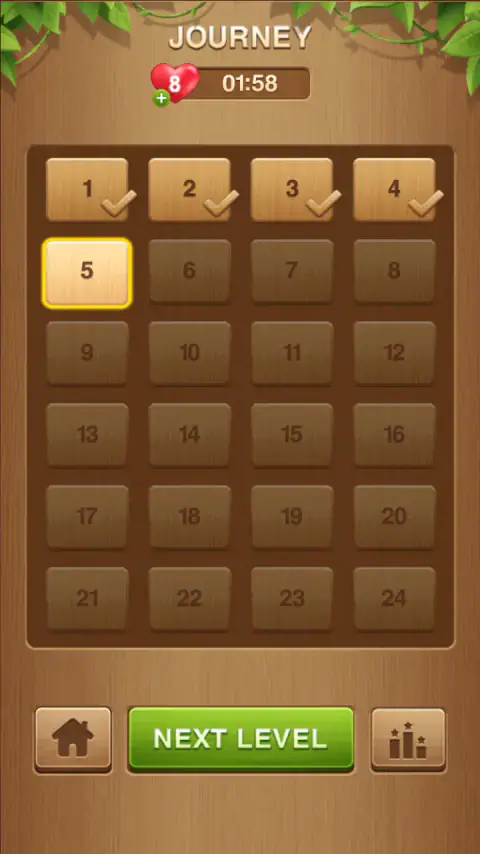
The Journey map lists 100 levels in 25 rows of four, each locked until you finish the one before. Every level is the same kind of task with different numbers: collect gems. There are six gem colours, and a level asks for anything from a single gem, on level 1, up to sixty across three colours near the end. The gems sit on the board from the start, and some arrive later set inside a piece; our level 2 asked for three green ones and finished on 4/3 because one came free.
Underneath, there is a split nobody mentions. Levels 1 to 75 hand every player the exact same pieces, in the exact same order — an average of 51 of them, and as many as 133. Levels 76 to 100 have no such fixed sequence, and the game falls back to its random deal. So the first three quarters of the Journey is a fixed puzzle, dealt to every player in the world in the same order, and the last quarter is the endless game with a target bolted on.
Journey also costs you something. Starting a level spends a heart, win or lose. You hold ten, and one comes back every five minutes, with the timer running on the map screen. Ten attempts feels generous until a level beats you twice.
Endless is a ladder, not a sandbox
Single mode looks open-ended and is not. Cross 100 points and everything stops for a panel reading NEXT MILESTONE, Target Score 500. Cross 500 and the next one says 1000. There are twenty of these rungs, running 100, 500, 1000, 1500, 2000, 3000 and on up to a final 100,000, with the bar under your score filling toward a little trophy as you go.
It also remembers. Close the tab mid-run and the board, the pieces and the score are waiting when you come back; we picked ours up at 101 points two sessions later.
One thing it does not have is company. The trophy button opens a leaderboard that reads "Leaderboard is empty!", with a single row underneath it: your own, ranked 99+. That board was built to show Facebook friends, and on the open web there are none, so it shows you to yourself.
On a phone
Turn a phone sideways and the game does not reflow; it keeps its tall portrait shape in a narrow strip down the middle of the screen with the wallpaper either side. It still works there, and we placed and cleared a line that way, but portrait is the right way to hold it.
Touch is not a second-class port. On a phone the piece is deliberately drawn lifted clear of your finger rather than under it, and the grab area for each tray piece is a third of the screen wide, so picking one up is hard to fluff. If your phone has vibration and you keep a streak going, it buzzes harder each time: a fifth of a second at two clears in a row, up to seven tenths at six, where the streak counter stops.
Two honest notes. An advert overlay loads with the game, and again when you come back to the menu. And Settings holds just one switch, Sound.
More block and grid puzzles
Block Crush and Sand Blocks are two plainer takes on dropping shapes into a grid, worth a go if you want to feel what the boxes are doing here. Vegetables Match 3 trades the sudoku rules for a 36-level match-three grid against a five-minute clock. Word Blossom fills a small crossword by dragging across a ring of letters instead of clearing shapes. More in our puzzle category.
Screenshots
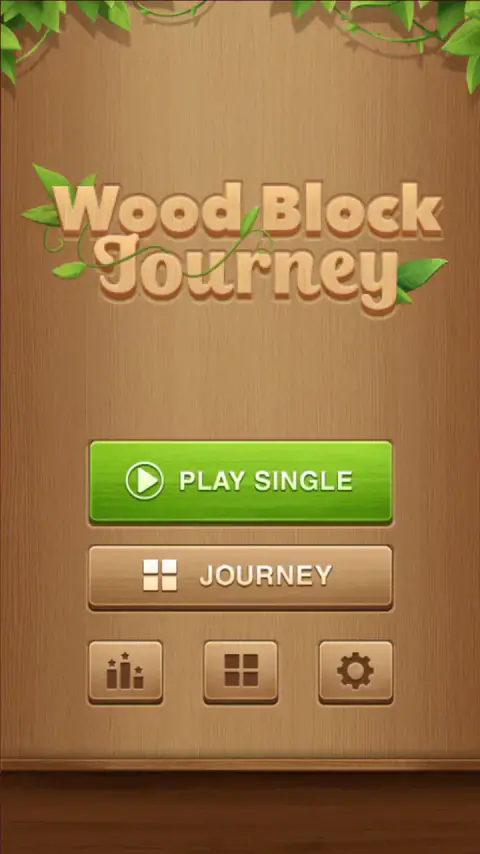
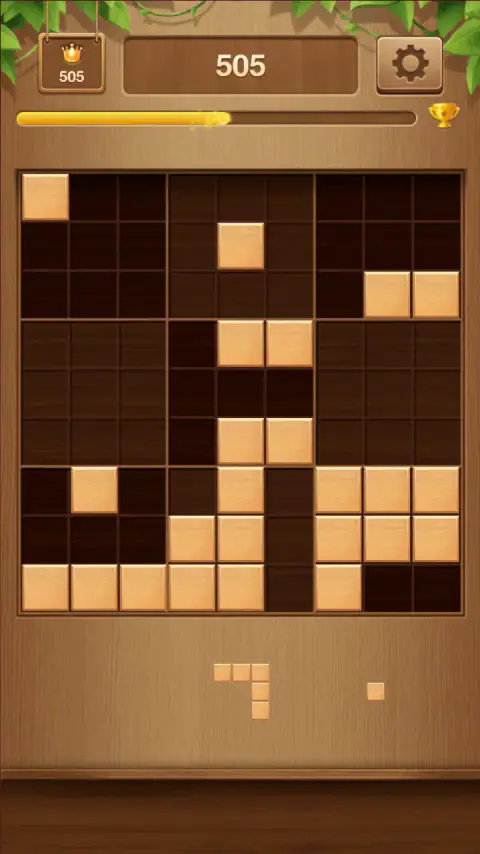
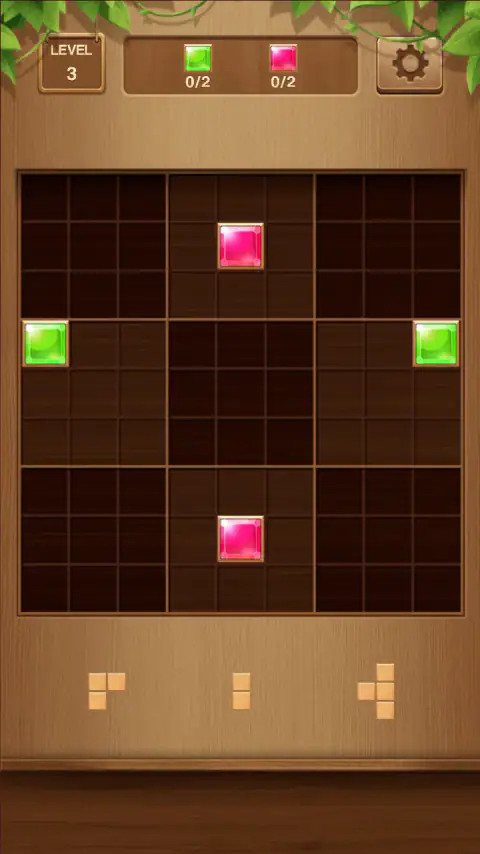
How to play Wood Block Journey
- Drag a piece from the tray at the bottom onto the board. There are always three, and three more only arrive once all three are gone. Pieces cannot be turned.
- Fill a row, a column or one of the nine boxes and it clears. Filling more than one with the same piece is a combo, and the game shouts about it: two at once is COOL, three is GOOD, four or more is EXCELLENT.
- In Single mode, keep going until none of your three pieces fits anywhere. That is the end, with no second chance.
- In Journey, collect the gems listed at the top. A gem is collected when the line or box it is sitting in clears, not when you touch it.
Tips from our session
- The deal is weighted, so plan around the common pieces. The single square, the two-bar and the three-bar are the three most likely things to arrive, each about one piece in nine. You will see them constantly, so small awkward gaps are less fatal here than they look.
- Leave a straight run of five. The game checks the board for a clear run of five in a row or a column, and if it then deals you a long bar, it turns the bar to match your gap. Leave the gap ragged and that help never happens.
- Boxes are easier than rows. Both are nine squares, but a box's nine sit together: two 2x2 pieces and a single square finish one. Nothing you are ever dealt reaches across a whole row.
- Straddle a boundary. A piece laid across the line between two boxes counts toward both of them, and toward a row and a column at the same time. That is where the combos come from.
- On a phone, look above your thumb. The piece is drawn floating clear of your finger, so what you are aiming with is not under your hand.
Controls
| Mouse drag | Pick a piece out of the tray and drop it on the board. Pieces cannot be rotated |
|---|---|
| Touch drag | The same on a phone or tablet, except the piece floats above your thumb so you can see the landing square |
Features
- A 9x9 board with sudoku's 3x3 boxes, so a box can clear on its own without finishing a row
- 51 piece shapes, from a single square to a five-square bar, and none of them can be turned
- Two shapes are never dealt to you, however long you play: the full 3x3 slab and the five-square diagonal
- Placing a piece scores one point per square; every line, column or box you clear is worth 18, plus 10 for each move in a row that has cleared something
- 100 Journey levels that ask for gems by colour, and the first 75 hand every player the same pieces in the same order
- Endless mode is a ladder of 20 targets, from 100 points up to 100,000
- Journey costs a life per attempt; you hold ten and one comes back every five minutes
Game details
- Developer
- SUN.STUDIO
- Release date
- March 2022
- Added here
- December 2020
- Technology
- HTML5 (Phaser 3, 375×667 portrait)
- Platforms
- Browser (desktop), Browser (mobile & tablet, touch)
- Download size
- 1.4 MB
- Ad requests
- 3 (few)
- Has a save
- Yes
- Saved progress
- Saving, when available, is managed by this game. Mava cannot confirm your level.
Measured by opening the game ourselves on 2026-09-10, not taken from the feed. Twelve seconds on a phone-sized screen, with ad requests counted and blocked rather than loaded.
FAQ
What is Wood Block Journey?
Wood Block Journey is a free browser block puzzle by the studio SUN.STUDIO. You drag wooden shapes onto a 9x9 grid, and a row, a column or one of the nine 3x3 boxes vanishes when you fill it. There are two modes: an endless Single run chasing a score, and a Journey of 100 levels where you collect coloured gems.
Is Wood Block Journey the same as the Wood Block Journey app on Google Play?
No. The Android game of that name, by Microchaos, is played on a 10x10 board with no boxes. This one is by SUN.STUDIO and is played on a 9x9 sudoku grid where the 3x3 boxes clear as well. Same name, different games.
How do you score points in Wood Block Journey?
Every square of wood you put down is worth one point on its own. Clearing a row, a column or a 3x3 box is worth 18, so clearing three at once pays 54. On top of that you get 10 points for every consecutive move that has cleared something, and that streak resets the moment a move clears nothing.
Can you rotate the pieces in Wood Block Journey?
No. What you are dealt is what you have to fit, which is why the shape of the hole you leave matters more than in games that let you turn things. The game does help a little: if you leave a straight run of five empty squares and it deals you a long bar, the bar arrives already turned the right way.
How many levels does Wood Block Journey have?
The Journey map lists 100, in 25 rows of four. The store description says "over 60", which undersells it. Every level asks for the same thing in different quantities: collect so many gems of each colour by clearing the lines or boxes they sit in.
Why does Wood Block Journey have hearts?
Journey mode spends a life every time you start a level. You hold at most ten, and the game gives one back every five minutes, with a countdown on the level map. Single mode does not use them.
Can you continue after a game over in Wood Block Journey?
No. When none of your three pieces fits anywhere, the run ends and a YOUR SCORE panel offers the menu, a new game or the Journey map. There is no revive and no watch-an-advert second chance.
Can I play Wood Block Journey unblocked?
It is an HTML5 game that runs in a browser tab with nothing to install. Whether a school or work network allows this site is up to that network; we do not offer ways around filters.