
Word Games
Scrabble's letter values were set by counting the letters on the front page of the New York Times. In 1938.
30 games · hand-picked, then filled from the catalogue
Every letter in Scrabble is worth what a man decided in 1938 after counting the front page of a newspaper.





How this list is put together
Alfred Butts was an out-of-work architect, and to set his tile values and tile counts he worked out English letter frequency by hand from the front page of the New York Times. That is the whole methodology. It is why Z and Q are worth ten, why there are twelve E's, and why the numbers have never really been revised despite eighty-odd years of the language moving on. A whole competitive hobby rests on one man's afternoon with a newspaper and a pencil.
Word games are full of this. They feel like they encode something eternal about language, and mostly they encode a decision somebody made once.
Two games that share a name and nothing else
The most useful thing to know before you open anything on this page.
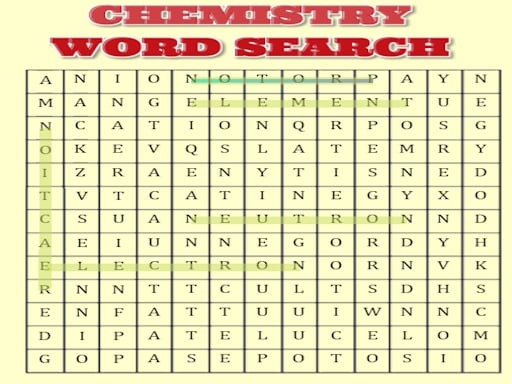
A word search is not a word game. The words are printed beside the grid; you are not being asked to know them, you are being asked to find them. That makes it a visual scanning task wearing a vocabulary costume — which is why it works perfectly well in a language you barely speak, and why children who cannot yet read fluently can still be good at it.
Hangman and the daily guessing games are the opposite. Nothing is shown. Every guess is a bet, and the whole game lives in what you already know. Vocabulary is the entire mechanic, and there is no way around it.
The two sit side by side in every catalogue on the web, including this one, under the same tag. If English is not your first language, start with the searches. If it is, the searches will bore you within a minute and the guessing games will not.
Why the letter you guess first matters more than the letter you guess best
A small piece of hangman strategy that most people never work out.
The instinct is to open with E because E is the commonest letter in English. That is true and it is not quite the right question. What you actually want early is a letter that splits the possible words into the most even groups — a letter that is roughly as likely to be in the word as not. A letter that appears in ninety per cent of candidates tells you almost nothing when it turns up.
In practice that means vowels early are fine, but the consonants that earn their place are the middling ones — R, S, T, N — rather than the rare showy ones. And it means guessing a letter you are confident about is often the worst move available, because confirmation costs a turn and buys no information.
What is here
Ninety-three games carry the word tag in this catalogue, and after filtering out the ones that wandered in from other genres, thirty make this page.
They are the four families you would expect: searches, hangman and its variants — including a two-to-four-player version on one keyboard, which is the format the game was actually invented for — anagram and letter-arrangement puzzles, and daily guessing games. What is thin here is crosswords: a real crossword needs hand-written clues, which is journalism rather than game development, and it shows in how few of them exist for free in a browser.
Questions people ask
Which of these need a big vocabulary?
Fewer than you would think, and it splits cleanly. A word search needs none at all — the words are printed next to the grid and the job is finding them, which is a visual task in disguise. Hangman and daily guessing games need real vocabulary, because nobody is going to show you the answer. If English is not your first language, the searches are the ones that work immediately.
Why is one puzzle a day so much more addictive than unlimited puzzles?
Because it ends. The clearest evidence is that Wordle's creator built the same game twice: an unlimited version in 2013 that went nowhere, and a one-a-day version that reached three hundred thousand players in three months. Same mechanic, one rule different.
Are these good for children learning to read?
Several are, and they are among the few games that genuinely help without feeling like homework. Word searches build letter-shape recognition; hangman forces you to sound out patterns. Neither has chat or purchases.
Do they work on a phone?
Most do, and we mark which. Word games are among the best-served genres on touch — you are tapping letters, not aiming — though word searches on a small screen can mean a lot of pinching to read the grid.