


How this list is put together
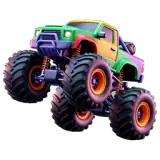
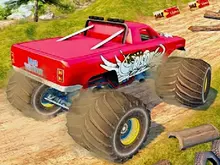
In real competition the wheels measure sixty-six inches — a metre sixty-eight, taller than most people reading this — and the truck weighs around five and a half tonnes. Those dimensions are not a coincidence or an arms race: they are the rulebook. That is why every truck you go and watch looks exactly the same size, and why the show is not about who has the better vehicle but about what they do with it: jump, spin and crush cars.
The games inherited that without saying so. You do not win here by arriving first.
What the genre actually measures
Look at the catalogue's tags and the split surprises almost everybody.
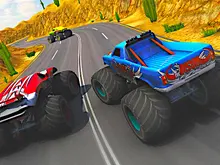
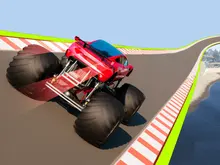
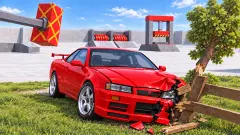
Of the thirty-three games tagged monster truck, twelve are monster truck racing games and eight are stunt games. The other thirteen are neither: parking, cargo delivery and demolition. Which is to say most of this genre is not about speed, it is about controlling a vehicle that does not want to be controlled.
And it makes sense. A five-tonne truck with a metre of suspension travel is interesting precisely because it responds late, bounces, and keeps moving after you let go of the controls. A normal racing game hides that. These put it in the middle.
The one thing you have to learn
Land flat.
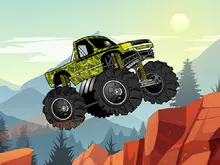
In almost all of these — 2D side-view physics games, the same family as the hill-climb games — the arrow keys in the air do not accelerate: they rotate the truck. It is the confusion that ruins anybody's first ten attempts. You jump, you hold the accelerator because that is what you would do in a car, the nose lifts, you land on your tail and you flip.
The correct move is the opposite: the moment you leave the ground, let go, look at the angle, and correct it with short taps of the opposite arrow. The suspension absorbs a brutal drop if you arrive with all four wheels roughly at once, and forgives absolutely nothing if you arrive nose down.