

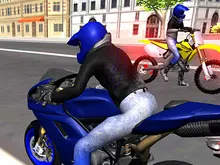
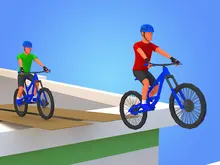

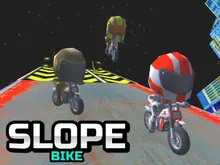
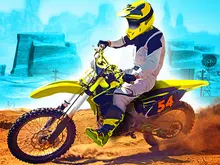
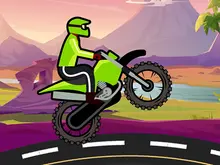
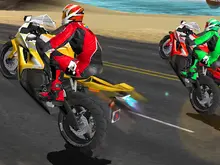
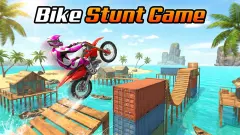
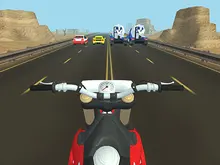
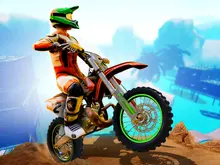
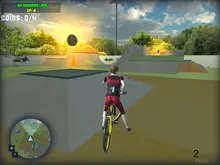
How this list is put together
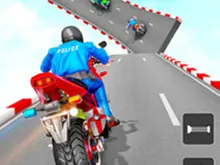
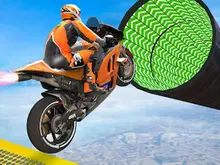
You do not ride the corner: you tilt the bike in the air. The forward and back arrows neither accelerate nor brake, they rotate the bike on its own axis — and that rotation decides whether the front wheel touches down before the rear, or whether you land face first into the next ramp. Anybody who treats it as racing crashes on the first climb and concludes the controls are bad. They are not: they are different controls.
Course or race, and why nearly everything here is a course
The genre splits in two and the halves do not resemble each other.
The course gives you one track, full of spikes, saws and collapsing platforms, and expects you to die thirty times until you have memorised where to tilt. There is no opponent. It is a puzzle dressed as a motorbike, and the satisfaction is a puzzle's: you did not get faster, you understood.
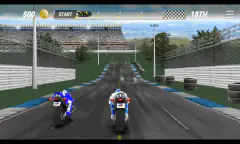
The race puts others on the track and measures who arrives. It is reflex rather than memory, and in a browser it is much rarer.
The detail that separates the good from the bad
Where the bike's centre of balance sits.
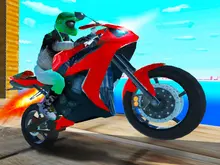
In the well-made ones the weight is roughly in the middle and the tilt responds immediately: you touch the arrow and the bike rotates just enough to correct. In the badly made ones the weight is at the back, the bike wheelies on its own under acceleration, and you spend the game fighting the vehicle instead of the track.
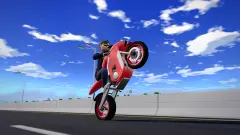
You can tell in the first ten seconds: accelerate on a flat straight. If the front wheel lifts without you asking, close it and open another.